The hum of electricity is the soundtrack of modern civilization, a complex symphony conducted across millions of miles of cable and countless substations. For decades, managing this vast and intricate network, the power grid, has been a monumental challenge, often reactive rather than proactive. Utilities have traditionally responded to faults—a downed line, a failed transformer, a cascading blackout—after they occur, scrambling crews and leaving customers in the dark. However, a paradigm shift is underway, moving the industry from a state of reaction to one of prediction and autonomous healing. At the heart of this revolution is a transformative technology: the digital twin.
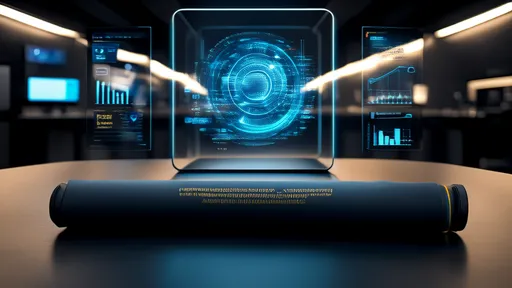
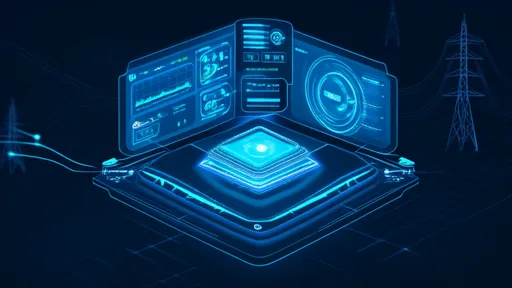
A digital twin is far more than a simple computer model or a static 3D visualization. It is a dynamic, living virtual replica of a physical asset, process, or system, continuously updated with real-time data from a multitude of sensors, IoT devices, and historical records. This creates a high-fidelity cyber-physical link, a bridge between the tangible grid and its intangible digital counterpart. For a national power grid, this means building a massively complex virtual ecosystem that mirrors every generator, every transmission tower, every distribution line, and every smart meter in near-real time. This digital doppelgänger doesn't just show what the grid looks like; it simulates how it behaves under an infinite variety of conditions.
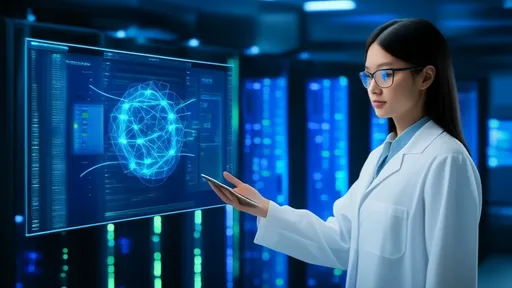
The true power of this technology for fault prediction lies in its marriage with advanced analytics and artificial intelligence. The digital twin ingests a relentless stream of data—load metrics, weather patterns, equipment temperature, vibration analysis, and satellite imagery. Sophisticated AI algorithms, often leveraging machine learning, then scour this data within the safe confines of the virtual environment. They are not looking for a single smoking gun but rather for subtle, complex patterns and anomalies that precede failure. They can identify a transformer whose insulation is slowly degrading due to repeated heat cycles, a transmission line that is becoming dangerously stressed under specific load and wind conditions, or a component whose vibration signature is deviating from the norm. These are the whispers of impending failure that were once drowned out by the noise of the grid's operation. The digital twin gives them a voice, providing grid operators with forecasts of potential faults days, weeks, or even months before they would traditionally become apparent.
This predictive capability is a monumental leap forward, but the application of digital twins extends even further into the realm of science fiction made real: self-healing grids. Once a potential fault is predicted, the digital twin becomes a mission-control center and a testing ground. Instead of human operators manually assessing the problem and devising a solution under extreme time pressure, the AI can immediately generate multiple mitigation strategies. It can run thousands of simulations in the digital twin in minutes, testing each strategy against a universe of "what-if" scenarios. What if we reroute power through Substation B? How will that affect the aging transformer there, given the current temperature? What if we slightly reduce load by engaging a demand-response program with commercial customers? The system can identify the optimal sequence of actions that contains the problem, minimizes customer impact, and prevents a localized issue from cascading into a widespread outage.
This is where the grid begins to heal itself. Upon selecting the optimal strategy, the system can automatically execute it by sending commands to smart switches, reclosers, and other automated grid equipment. It can isolate the faltering component, reroute power flows seamlessly, and restore service to affected areas—all within minutes or seconds, often before the majority of customers are even aware a problem existed. This autonomous operation drastically reduces outage times, improves overall system reliability metrics like SAIDI and SAIFI, and enhances safety by limiting the need for crew dispatches to dangerous fault conditions.
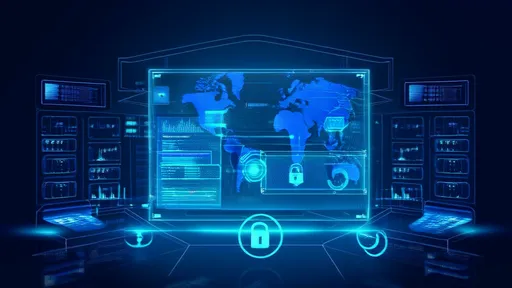
Of course, the path to fully autonomous, self-healing grids powered by digital twins is not without its obstacles. The technological hurdle is immense, requiring the deployment of a ubiquitous sensor network, ultra-high-speed communication infrastructure (like 5G), immense computational power for the simulations, and incredibly robust AI models. Furthermore, the cybersecurity risks are equally significant; a digital twin connected to grid control systems represents a high-value target for malicious actors, necessitating unprecedented levels of cyber protection. Finally, there are regulatory and cultural challenges. Utilities, often conservative by nature, must learn to trust the recommendations and actions of an artificial intelligence, and regulators must adapt frameworks to accommodate this new paradigm of autonomous decision-making.
Despite these challenges, the momentum is undeniable. Early pilot projects and deployments around the world are already demonstrating staggering results—dramatic reductions in outage durations, improved integration of volatile renewable resources, and optimized asset management. The digital twin is evolving from a novel concept into the central nervous system of the modern grid. It represents the ultimate fusion of the physical and digital worlds, empowering us to not only listen to the grid's symphony but to anticipate its every note and correct its every dissonance before it's ever heard. We are moving toward a future where the lights won't just flicker back on faster; they might not go out at all.
By /Aug 26, 2025
By /Aug 26, 2025
By /Aug 26, 2025
By /Aug 26, 2025
By /Aug 26, 2025
By /Aug 26, 2025
By /Aug 26, 2025
By /Aug 26, 2025
By /Aug 26, 2025
By /Aug 26, 2025
By /Aug 26, 2025
By /Aug 26, 2025
By /Aug 26, 2025
By /Aug 26, 2025
By /Aug 26, 2025
By /Aug 26, 2025
By /Aug 26, 2025
By /Aug 26, 2025
By /Aug 26, 2025
By /Aug 26, 2025
