Automating Documentation: Generating API Documentation and User Manuals from Code Comments

Aug 26, 2025 By

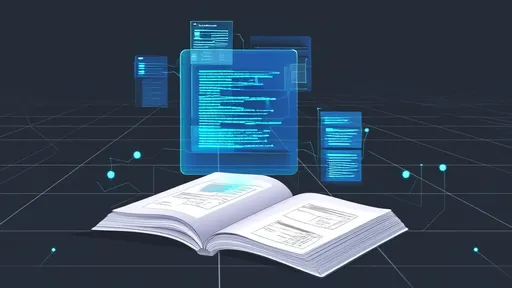
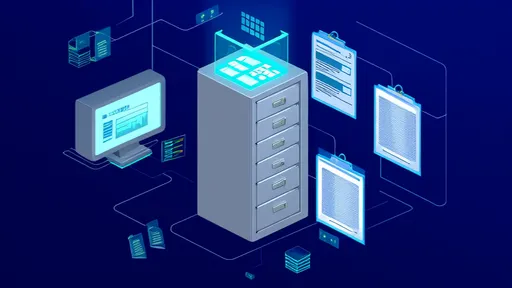
In the ever-evolving landscape of software development, the practice of generating documentation automatically from code comments has emerged as a transformative approach to maintaining accurate and up-to-date API references and user manuals. This methodology not only streamlines the documentation process but also ensures that the content remains synchronized with the codebase, reducing the common pitfalls of outdated or inconsistent documentation that plagues many development projects.

The concept itself is straightforward: developers embed specially formatted comments directly within their source code, which are then parsed by documentation generation tools to produce comprehensive, well-structured documents. These tools, such as Javadoc for Java, Doxygen for C++, and Sphinx for Python, have become integral to modern software engineering workflows. They interpret tags and annotations within comments, extracting critical information about classes, methods, parameters, return values, and exceptions, transforming them into readable and navigable documentation.

One of the most significant advantages of this approach is its ability to foster consistency between the code and its documentation. When documentation is generated directly from the source, any changes in the code—such as modifying a function's parameters or updating its behavior—are automatically reflected in the documentation upon regeneration. This eliminates the tedious and error-prone task of manually updating documents every time the code changes, a process that is often neglected under tight deadlines, leading to documentation drift.

Moreover, automating documentation from comments encourages developers to write more descriptive and meaningful comments. Knowing that these comments will form the basis of user-facing documentation incentivizes thoroughness and clarity. Instead of vague or cryptic notes, developers are prompted to provide detailed explanations, usage examples, and context, which not only benefits end-users but also aids fellow developers who may later work on the code. This practice enhances code readability and maintainability, serving a dual purpose.

The generated documentation typically includes API references that detail every public class, method, and property, complete with descriptions, type information, and examples. These references are invaluable for developers who are integrating with or building upon the software, as they provide a clear and authoritative guide to the API's functionality. Additionally, many tools support the generation of user manuals or guides that explain how to use the software from an end-user perspective, often pulling from higher-level comments that describe modules, components, or overall architecture.

Another compelling benefit is the support for multiple output formats. Documentation generators can produce output in various forms, such as HTML websites, PDF documents, or even man pages, making the documentation accessible in the format most convenient for the audience. HTML outputs, in particular, are highly interactive, featuring searchable content, cross-references, and navigation aids that improve the user experience significantly compared to static documents.

Despite these advantages, the success of automated documentation generation hinges on the discipline and consistency of the development team. It requires adherence to comment conventions and the use of specific tags, which can involve a learning curve. Teams must establish and follow standards for comment formatting to ensure that the generated documentation is coherent and uniformly structured. Without this consistency, the output may be fragmented or confusing, undermining its utility.

Furthermore, while automated tools excel at generating reference material, they may fall short in producing narrative or tutorial-style content that requires a more human touch. Thus, many projects combine automated generation with manually written sections to cover concepts, tutorials, and best practices that are not easily derived from code comments alone. This hybrid approach leverages the strengths of both methods, resulting in comprehensive and user-friendly documentation.

Looking ahead, the integration of artificial intelligence and machine learning promises to further enhance documentation automation. AI could assist in generating more natural language descriptions from code, suggest improvements to comments, or even identify gaps in documentation coverage. These advancements could reduce the burden on developers and produce even higher-quality documentation with less effort.

In conclusion, automating documentation from code comments represents a best practice in software development, aligning documentation efforts directly with the codebase to ensure accuracy and timeliness. By leveraging tools and maintaining disciplined commenting practices, teams can produce detailed API references and user manuals efficiently, supporting both developers and end-users effectively. As technology continues to advance, this practice will likely become even more sophisticated and integral to successful software projects.

Recommend Posts
IT

Balancing Offline Behavior Analysis Technology and Privacy Protection in Smart Retail

By /Aug 26, 2025

The bustling aisles of modern retail stores have quietly transformed into vast data collection fields, where every footstep, every glance, and every interaction is meticulously captured and analyzed. Smart retail technology, particularly offline behavior analysis, has ushered in an era of unprecedented consumer insight, enabling retailers to optimize store layouts, personalize promotions, and streamline operations with surgical precision. From heat mapping that traces customer movement patterns to facial recognition systems gauging emotional responses to products, the tools at their disposal are both sophisticated and increasingly invasive. As these technologies weave themselves into the fabric of daily commerce, they promise enhanced efficiency and customer satisfaction, yet simultaneously cast a long shadow over individual privacy rights.
IT

Economic Benefit Model of Predictive Maintenance in Wind Turbine Systems

By /Aug 26, 2025

The wind energy sector stands at a pivotal juncture, where operational efficiency and cost management are no longer secondary concerns but central to sustainable growth. For years, the industry has relied on traditional maintenance strategies—primarily reactive and preventive approaches—that often lead to unexpected downtimes, inefficient resource allocation, and escalating operational expenses. However, a transformative shift is underway, driven by the integration of predictive maintenance technologies. By leveraging data analytics, IoT sensors, and machine learning, predictive maintenance is redefining how wind farm operators manage their assets, promising not just enhanced reliability but also substantial economic benefits.
IT

Audit and Bias Correction of Fairness in Medical AI Models

By /Aug 26, 2025

The growing integration of artificial intelligence into healthcare systems has brought unprecedented efficiency and diagnostic capabilities, yet it has also surfaced profound ethical challenges. Among these, the issue of fairness in medical AI models has emerged as a critical frontier for developers, clinicians, and regulators. An AI system deemed successful in a controlled laboratory setting can, when deployed in the complex tapestry of human society, produce wildly divergent outcomes for different demographic groups. This isn't merely a technical glitch; it is a reflection of historical inequities and biases embedded within the very data used to teach these algorithms. The pursuit of fairness is therefore not an optional add-on but a fundamental requirement for building trustworthy and equitable healthcare technology.
IT

Evolution of Real-time Fraud Detection Systems in the Financial Industry

By /Aug 26, 2025

The landscape of financial fraud has undergone a dramatic transformation over the past few decades, evolving from simple, isolated scams to sophisticated, large-scale operations that leverage technology to exploit vulnerabilities in real-time. In response, the financial industry's approach to fraud detection has had to undergo its own radical evolution. The journey from manual, rule-based reviews to today's dynamic, intelligent, and real-time fraud detection systems represents one of the most significant technological advancements in modern finance. This progression is not merely a story of better software; it is a fundamental shift in philosophy, moving from a reactive stance to a proactive, predictive defense of assets and customer trust.
IT

Legal Validity and Technical Implementation Boundaries of Smart Contracts

By /Aug 26, 2025

The intersection of smart contracts and legal frameworks represents one of the most compelling and complex frontiers in modern technology and law. As blockchain-based agreements become increasingly prevalent in sectors ranging from finance to supply chain management, the question of their legal standing and technical limitations has moved from academic debate to practical necessity. Smart contracts, at their core, are self-executing contracts with the terms of the agreement directly written into code. They run on decentralized networks, automatically enforcing obligations when predetermined conditions are met, ostensibly without the need for intermediaries. This promises a revolution in efficiency, transparency, and trust in contractual dealings. However, this very autonomy and code-centric nature create a fascinating tension with traditional legal systems, which are built on human interpretation, precedent, and discretion.
IT

Constructing a Scenario Library for Autonomous Driving Simulation Testing and Challenges of Realism

By /Aug 26, 2025

The development of autonomous vehicles hinges on the ability to test and validate their performance in a vast array of driving scenarios. While real-world testing remains crucial, it is prohibitively time-consuming, expensive, and often dangerous. This is where simulation steps in, offering a scalable, controlled, and safe environment to push autonomous systems to their limits. The cornerstone of any effective simulation framework is its scenario library—a comprehensive and meticulously curated collection of virtual driving situations. The construction of this library and the relentless pursuit of authenticity within it represent one of the most significant technical challenges in bringing self-driving technology to maturity.
IT

The Implementation of Extended Reality (XR) in Remote Medical Surgery Guidance

By /Aug 26, 2025

The operating room hums with a familiar tension, but something is different. A surgeon, hundreds of miles from the patient on the table, is not peering over a junior colleague’s shoulder via a shaky video feed. Instead, they are virtually present, their digital avatar standing beside the primary surgeon, who is wearing a sleek headset. With a gesture, the remote expert draws a precise, glowing incision line directly onto the patient’s anatomy, visible only through the lens of extended reality. This is not a scene from science fiction; it is the rapidly evolving present of remote surgical guidance, powered by Extended Reality (XR).
IT

Blockchain Technology for Interoperability in Digital Identity Credentials (DIDs)

By /Aug 26, 2025

The digital identity landscape is undergoing a profound transformation, moving away from centralized silos controlled by corporations and governments toward a user-centric model. At the heart of this shift is Decentralized Identity (DID), a concept powered by blockchain technology. While the promise of individuals owning and controlling their own identity data is compelling, the true potential of this paradigm can only be unlocked through a critical, yet complex, element: interoperability.
IT

The Precision Limit of Computer Vision in Automated Quality Inspection of Products

By /Aug 26, 2025

The relentless march of automation in industrial manufacturing has found one of its most compelling champions in computer vision. For years, the task of quality inspection fell to human operators, whose sharp but fallible eyes would scan for defects on assembly lines moving at ever-increasing speeds. Today, sophisticated camera systems and deep learning algorithms have largely taken over, promising unparalleled speed and consistency. Yet, as these systems become ubiquitous, a critical question emerges from the hum of the factory floor: what is the absolute precision limit of computer vision in automated quality control? This is not merely an academic query but a fundamental one that dictates the feasibility, ROI, and ultimate trust we place in these automated sentinels of quality.
IT

Application of Digital Twin Technology in Power Grid Fault Prediction and Self-Healing

By /Aug 26, 2025

The hum of electricity is the soundtrack of modern civilization, a complex symphony conducted across millions of miles of cable and countless substations. For decades, managing this vast and intricate network, the power grid, has been a monumental challenge, often reactive rather than proactive. Utilities have traditionally responded to faults—a downed line, a failed transformer, a cascading blackout—after they occur, scrambling crews and leaving customers in the dark. However, a paradigm shift is underway, moving the industry from a state of reaction to one of prediction and autonomous healing. At the heart of this revolution is a transformative technology: the digital twin.
IT

Automating Documentation: Generating API Documentation and User Manuals from Code Comments

By /Aug 26, 2025

In the ever-evolving landscape of software development, the practice of generating documentation automatically from code comments has emerged as a transformative approach to maintaining accurate and up-to-date API references and user manuals. This methodology not only streamlines the documentation process but also ensures that the content remains synchronized with the codebase, reducing the common pitfalls of outdated or inconsistent documentation that plagues many development projects.
IT

Security Analysis of Cloud Development Environments Based on WebIDE

By /Aug 26, 2025

The shift towards cloud-based development environments represents one of the most significant transformations in software engineering practices over the past decade. Among these innovations, Web-based Integrated Development Environments, or WebIDEs, have gained substantial traction. These platforms allow developers to write, test, and deploy code entirely through a web browser, eliminating the need for powerful local machines and complex setup processes. Companies are increasingly adopting these solutions to enhance collaboration, streamline workflows, and reduce onboarding time for new developers. However, this migration to the cloud is not without its challenges, with security emerging as the paramount concern for organizations entrusting their intellectual property and development pipelines to third-party services.
IT

Standardized Management and Tool Support for Architectural Decision Records (ADR)

By /Aug 26, 2025

In the ever-evolving landscape of software development, the significance of architectural decisions cannot be overstated. These choices form the backbone of any system, influencing its scalability, maintainability, and overall success. However, all too often, these critical decisions are made in meetings or informal discussions, only to be forgotten or misunderstood as teams grow and projects evolve. This is where Architecture Decision Records, or ADRs, come into play—a simple yet powerful practice that brings clarity, accountability, and historical context to the architectural process.
IT

How Code Search and Navigation Tools Enhance Contribution Efficiency in Large Codebases?

By /Aug 26, 2025

In the sprawling digital cities that are modern codebases, developers often find themselves navigating unfamiliar territory. With millions of lines of code spread across countless files and directories, the challenge of making meaningful contributions to large projects can feel like trying to find a specific book in the Library of Congress without a catalog system. This is where sophisticated code search and navigation tools have emerged as nothing short of revolutionary, transforming the way engineers interact with and contribute to massive code repositories.
IT

Automated Orchestration of Chaos Engineering Experiments and Design of Safety Guardrails

By /Aug 26, 2025

The relentless pursuit of system resilience in today's complex digital ecosystems has catalyzed the evolution of chaos engineering from a manual, ad-hoc practice into a sophisticated discipline of automated orchestration. This maturation is not merely a shift in methodology; it represents a fundamental rethinking of how organizations proactively discover weaknesses before they cascade into catastrophic failures. The core challenge has pivoted from simply having the courage to break things to intelligently and safely designing how to break them at scale, repeatedly, and with measurable outcomes.
IT

Measuring Developer Experience (DX) Metrics and Improvement Methods

By /Aug 26, 2025

In the ever-evolving landscape of software development, the focus has traditionally centered on end-user satisfaction, performance metrics, and product reliability. However, a crucial yet often overlooked element has steadily gained prominence: Developer Experience, commonly abbreviated as DX. Much like User Experience (UX) defines how an end-user interacts with a product, DX encapsulates the entire spectrum of a developer's interaction with the tools, processes, and environments they use to build that product. It's the difference between a joyful, productive flow state and a frustrating grind filled with friction and obstacles.
IT

Automating Vulnerability Scanning and Patching in Open Source Software Supply Chains

By /Aug 26, 2025

In the sprawling digital ecosystem where modern software development thrives, a silent revolution is underway, targeting one of its most persistent and complex challenges: securing the open-source software supply chain. For years, the industry has grappled with the inherent vulnerabilities nested within the intricate web of dependencies that form the backbone of nearly every application today. The manual processes of identifying and patching these weaknesses have proven not only cumbersome but increasingly inadequate against the scale and sophistication of contemporary cyber threats. This has catalyzed a significant shift towards automation, transforming how organizations approach vulnerability management from a reactive scramble into a proactive, streamlined defense mechanism.
IT

Distributed Transaction Final Consistency Scheme Selection in Microservices Architecture

By /Aug 26, 2025

In the ever-evolving landscape of microservices architecture, achieving transactional consistency across distributed systems remains one of the most formidable challenges for engineering teams. The shift from monolithic applications to a constellation of loosely coupled services has unlocked unprecedented scalability and agility, but it has also fundamentally disrupted traditional transaction management. The classic ACID transactions that once provided strong consistency within a single database are no longer viable in a world where data is partitioned across numerous independent services, each with its own datastore. This has propelled the industry toward a new paradigm: eventual consistency.
IT

Evaluation of AI-based Automated Code Review Tools

By /Aug 26, 2025

The landscape of software development is undergoing a profound transformation, driven by the relentless integration of artificial intelligence into core engineering workflows. Among the most impactful of these integrations is the advent of AI-powered automated code review tools. These systems, no longer confined to the realm of academic research or futuristic speculation, are now actively deployed in production environments, promising to augment human expertise and accelerate development cycles. This article delves into the current state of these tools, evaluating their capabilities, limitations, and the tangible value they bring to development teams striving for higher quality and greater efficiency.
IT

In-Memory Computing: From Prototype to Commercialization

By /Aug 26, 2025

For decades, the computing industry has been shackled by the von Neumann bottleneck, the fundamental latency and energy inefficiency caused by shuttling data between separate memory and processing units. This architectural constraint has become increasingly problematic in the age of big data and artificial intelligence, where processing vast datasets in real-time is paramount. A paradigm shift is underway, moving computation from the processor directly into the memory array itself. This is the promise of In-Memory Computing (IMC), a technology long confined to research labs and theoretical papers that is now decisively stepping out of the prototype phase and into the commercial arena.