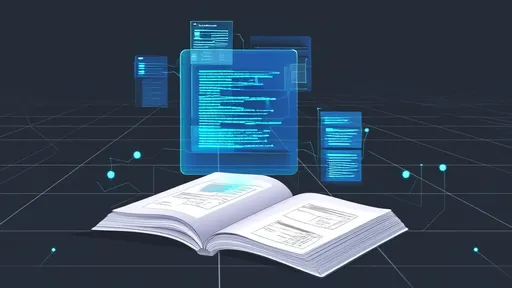
In the sprawling digital cities that are modern codebases, developers often find themselves navigating unfamiliar territory. With millions of lines of code spread across countless files and directories, the challenge of making meaningful contributions to large projects can feel like trying to find a specific book in the Library of Congress without a catalog system. This is where sophisticated code search and navigation tools have emerged as nothing short of revolutionary, transforming the way engineers interact with and contribute to massive code repositories.
The fundamental shift began when organizations realized that traditional file-by-file exploration simply wouldn't scale. Early version control systems provided basic search capabilities, but they were akin to using a flashlight in a dark warehouse—you could only see what was directly in front of you. The breakthrough came with tools that could index entire codebases and provide instant, contextual search results across every file, branch, and commit. Suddenly, developers could trace the entire lifecycle of a function or understand how a particular pattern was implemented across different services.
Modern code navigation platforms have evolved into what many describe as Google for your codebase. They don't just look for string matches—they understand programming languages, recognize patterns, and can even suggest related code based on semantic analysis. When a new developer needs to understand how authentication works in a complex system, they can search for authentication-related code and instantly see how different components interact, which services handle token validation, and where the configuration settings are stored.
One of the most significant impacts has been on onboarding efficiency. In the past, new engineers might spend weeks or even months gradually learning a codebase's structure and conventions. Today, they can use advanced search tools to quickly answer their own questions: How are errors handled in this service? Where is the database connection configured? What's the pattern for API versioning? This immediate access to knowledge dramatically reduces the time from first commit to meaningful contribution.
Beyond basic search, these tools provide what experienced developers call code intelligence. They can show all references to a function or class, display documentation on hover, and even highlight potential issues before code is committed. When making changes to a critical component, engineers can instantly see all the places that might be affected—something that previously required extensive manual investigation or tribal knowledge.
The collaborative aspects cannot be overstated. When multiple teams work on the same codebase, search and navigation tools create a shared understanding of the system's architecture. Engineers can quickly see how other teams have solved similar problems, discover existing utilities they might have otherwise recreated, and maintain consistency across the organization. This shared visibility helps prevent the fragmentation that often occurs in large, distributed engineering organizations.
Another transformative feature is the ability to search across time. Developers can look at how a particular piece of code has evolved, who made changes, and why those changes were made. This historical context is invaluable when debugging complex issues or understanding the reasoning behind certain implementation choices. It preserves institutional knowledge that might otherwise be lost when engineers move between teams or leave the organization.
The integration of these tools directly into development environments has been crucial. Instead of switching contexts to a web browser or separate application, developers can access powerful search capabilities right from their IDE. This seamless integration means questions get answered in seconds rather than minutes, maintaining flow state and reducing cognitive overhead. The tools become an invisible partner in the development process, anticipating needs and providing information before it's explicitly requested.
For open source projects, these navigation capabilities have particularly profound implications. They lower the barrier to entry for new contributors who might be intimidated by large, established codebases. A developer interested in contributing to a project can quickly find the relevant code, understand the patterns and conventions, and make confident changes without needing extensive hand-holding from maintainers. This democratization of knowledge helps projects scale their contributor base more effectively.
Advanced code search has also changed how engineers approach refactoring and large-scale code modifications. Instead of manual, error-prone find-and-replace operations, developers can use semantic search to identify all instances of a pattern, understand the context of each usage, and make systematic changes with confidence. This capability has made once-daunting tasks like library migrations or architecture changes significantly less risky and more manageable.
The machine learning enhancements beginning to appear in cutting-edge tools promise to take this even further. Systems can now suggest relevant code based on what you're working on, detect patterns you might have missed, and even identify areas that need attention based on how other similar codebases have evolved. This proactive assistance transforms code navigation from a reactive tool for answering questions to an active partner in software development.
Despite these advances, the human element remains crucial. The best tools enhance rather than replace developer intuition and experience. They provide information and context but still require human judgment to interpret and apply that knowledge effectively. The most successful organizations combine powerful tools with strong mentoring and documentation practices, creating an ecosystem where both humans and tools play to their respective strengths.
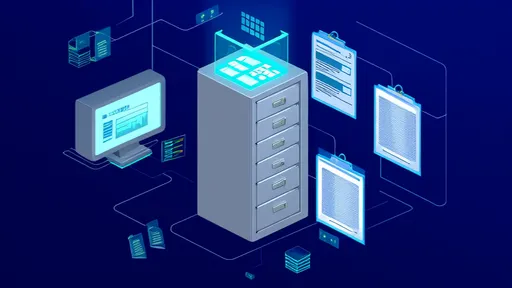
Looking ahead, the evolution of code search and navigation tools shows no signs of slowing. As codebases continue growing in size and complexity, and as development becomes increasingly distributed across teams and timezones, the ability to quickly understand and navigate complex systems will only become more valuable. The tools that started as simple search utilities are evolving into comprehensive knowledge management systems that capture and organize the collective intelligence of entire engineering organizations.
For developers working in large codebases, these tools have transitioned from nice-to-have amenities to essential infrastructure. They reduce cognitive load, prevent errors, accelerate learning, and ultimately enable engineers to focus on what matters most: solving problems and creating value. In the increasingly complex world of software development, effective code search and navigation isn't just about finding code—it's about understanding systems, sharing knowledge, and building better software, faster.

By /Aug 26, 2025

By /Aug 26, 2025

By /Aug 26, 2025

By /Aug 26, 2025

By /Aug 26, 2025

By /Aug 26, 2025

By /Aug 26, 2025

By /Aug 26, 2025

By /Aug 26, 2025

By /Aug 26, 2025
By /Aug 26, 2025

By /Aug 26, 2025
By /Aug 26, 2025

By /Aug 26, 2025

By /Aug 26, 2025

By /Aug 26, 2025

By /Aug 26, 2025

By /Aug 26, 2025

By /Aug 26, 2025

By /Aug 26, 2025
