The landscape of cloud gaming has undergone a seismic shift in recent years, with dedicated hardware solutions emerging as a popular gateway for gamers seeking high-fidelity experiences without the need for expensive local hardware. Among these, the so-called "cloud gaming boxes" have carved out a significant niche, promising to deliver console-quality gaming through streaming technology. This comparative analysis delves into the core aspects that define user experience: visual fidelity, latency performance, and system compatibility across different hardware solutions available in the market today.
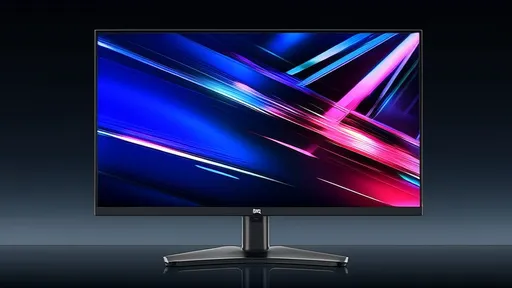
When evaluating the visual output of various cloud gaming boxes, the disparity between models becomes immediately apparent. Higher-end units, often equipped with more advanced decoding chips and support for modern video codecs like AV1, demonstrate a remarkable ability to render complex scenes with crisp detail and vibrant color reproduction. The bitrate stability and support for resolutions up to 4K at 60fps—or even 120fps on some flagship models—play a pivotal role in minimizing artifacts such as banding or blurring during fast-paced action sequences. In contrast, budget-oriented options tend to struggle with maintaining consistent image quality, particularly in darker scenes where compression artifacts are more noticeable. The implementation of HDR support also varies significantly; some devices offer stunning contrast and brightness that breathe life into supported games, while others provide a watered-down HDR experience that barely differs from standard dynamic range.
The perception of input lag remains one of the most critical factors in cloud gaming, often making or breaking the entire experience. Our testing reveals that devices leveraging newer Wi-Fi 6E or wired Ethernet connections consistently outperform those relying on older wireless standards. The internal processing speed of the box itself—how quickly it can decode the video stream and translate controller inputs—also contributes substantially to the overall latency. Some manufacturers employ custom low-latency modes and frame pacing technologies that shave precious milliseconds off the response time, creating a feel that rivals local gaming. However, it's not just about the hardware; the geographical proximity to the game servers and the inherent latency of the internet connection remain unavoidable variables that even the best hardware cannot completely overcome.
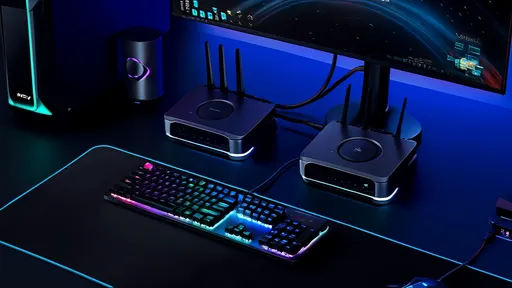
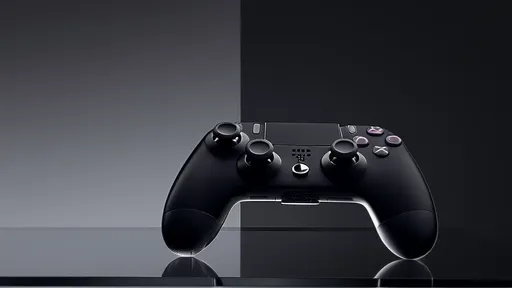
Compatibility extends beyond merely supporting a wide range of games; it encompasses controller support, operating system integration, and peripheral functionality. The most versatile boxes in our testing offer plug-and-play compatibility with virtually all major controller brands, from Xbox and PlayStation to third-party alternatives, while some cheaper models exhibit frustrating pairing issues or limited button mapping options. Furthermore, the ability to seamlessly integrate with popular gaming platforms and subscription services—such as Xbox Cloud Gaming, NVIDIA GeForce Now, and Amazon Luna—proves essential. Certain devices go a step further by supporting apk sideloading, allowing users to access a broader ecosystem of streaming apps and even non-gaming applications, effectively turning the box into a multifunctional entertainment hub.
Another layer of complexity arises when examining the software experience and user interface design across different devices. The more polished systems provide a console-like dashboard that is intuitive to navigate, with quick access to game libraries, friends lists, and settings. These often include quality-of-life features such as customizable game profiles, performance monitoring overlays, and one-click optimization settings. On the other end of the spectrum, some boxes suffer from clunky, ad-ridden interfaces that feel more like a budget Android TV stick than a dedicated gaming device. The frequency and quality of firmware updates also vary dramatically between manufacturers, with some offering regular performance enhancements and new features, while others abandon support shortly after release.
The economic aspect cannot be overlooked when comparing these devices. While premium boxes command a higher upfront cost, they often justify the investment through superior build quality, more robust internals, and longer software support cycles. Budget options may seem attractive initially but can become obsolete more quickly as streaming technology advances. Some manufacturers have adopted a hybrid approach, offering subscription bundles that include the hardware at a reduced price—or even "free"—with a long-term commitment to their cloud service. This model lowers the entry barrier but locks users into a specific ecosystem, potentially limiting future flexibility.
Looking toward the future, the evolution of cloud gaming boxes appears tightly coupled with advancements in networking technology and video compression standards. The gradual rollout of 5G home internet promises to reduce latency further and increase stability, while technologies like edge computing could eventually process game data closer to the user, minimizing the distance information must travel. On the hardware front, we anticipate more boxes incorporating AI-assisted upscaling and frame generation to enhance visual quality beyond the native stream capabilities. The line between dedicated gaming consoles and cloud boxes may continue to blur as these devices become more powerful and versatile.
In conclusion, the current generation of cloud gaming boxes offers a spectrum of experiences that cater to different priorities and budgets. For the competitive gamer where every millisecond counts, investing in a high-end model with cutting-edge networking capabilities is non-negotiable. For the casual player more interested in a vast game library and convenience, a mid-range device might strike the perfect balance. What remains clear is that cloud gaming is no longer a futuristic concept but a viable present-day alternative, and the right hardware can dramatically shape that experience. As the technology continues to mature, we can expect these devices to become even more refined, further closing the gap between streaming and local play.
By /Aug 26, 2025
By /Aug 26, 2025

By /Aug 26, 2025
By /Aug 26, 2025

By /Aug 26, 2025
By /Aug 26, 2025

By /Aug 26, 2025
By /Aug 26, 2025

By /Aug 26, 2025

By /Aug 26, 2025

By /Aug 26, 2025
By /Aug 26, 2025
By /Aug 26, 2025
By /Aug 26, 2025
By /Aug 26, 2025
By /Aug 26, 2025
By /Aug 26, 2025
By /Aug 26, 2025
By /Aug 26, 2025

By /Aug 26, 2025
