The PC DIY landscape is undergoing a subtle but significant transformation. For years, the pursuit of a singular, all-powerful 'ultimate gaming rig' dominated enthusiast discussions. Builders chased higher frame rates and greater resolutions across a broad spectrum of titles, seeking a machine that could handle anything from a sprawling open-world RPG to a fast-paced competitive shooter with equal prowess. However, a new, more nuanced philosophy is emerging from the community: the art of tailoring a system's hardware not for general dominance, but for a specific, beloved genre of games. This shift moves beyond raw benchmark numbers and into the realm of curated experience, where every component is chosen to heighten immersion and performance within a defined digital playground.
This trend is largely driven by a maturation within the gaming industry itself. Game genres have evolved beyond basic categorizations, developing distinct technical personalities and demanding unique resources from the hardware they run on. A modern cinematic adventure game, for instance, places a tremendous burden on the GPU, demanding not just raw processing power for high-resolution textures and complex lighting but also vast amounts of VRAM to keep those assets readily accessible. These titles are often less concerned with achieving hundreds of frames per second and more focused on delivering a stable, visually stunning, and immersive experience, often capped at 60 or 120 FPS to synchronize beautifully with high-quality monitors.
Conversely, the world of competitive esports and fast-paced multiplayer shooters operates on an entirely different set of rules. Here, the priority shifts almost entirely to the CPU and system memory. The goal is to achieve the highest possible frame rates, often targeting 360Hz or even 480Hz refresh rates, to minimize input lag and provide the player with the most immediate and fluid visual feedback. In these scenarios, the engine is constantly processing player positions, projectile physics, and network information—tasks that are heavily dependent on single-core and low-latency memory performance. A powerful GPU is still necessary, but it often runs at lower graphical settings to eliminate any potential bottleneck from the central processor, ensuring that the frame rate never dips during critical moments.
Then there are the simulators—flight, racing, and complex city builders—that carve out their own unique niche. These titles are notorious for their reliance on both strong single-core CPU performance for physics calculations and a powerful GPU for rendering vast, detailed environments. Furthermore, they often benefit immensely from specialized peripherals and hardware. A racing sim rig is no longer complete without a force-feedback steering wheel, but the savvy builder is now also considering multi-monitor setups or high-resolution VR headsets, which in turn demand even more graphical horsepower to drive all those pixels smoothly. The build becomes an ecosystem, with the core PC components selected specifically to support and empower these specialized external devices.
This movement towards genre-specific builds is empowering for the DIY enthusiast. It represents a move away from blindly following tier lists and towards a more thoughtful, personalized approach to system integration. The question is no longer simply "what is the best GPU?" but rather "what is the best GPU for the types of worlds I want to get lost in?" This encourages deeper research into game engines, how they utilize hardware, and which components offer the most meaningful performance uplift for a given task. It fosters a more intimate connection between the builder and their machine, as every part has a deliberate purpose tied directly to their passion.
For the builder dedicated to narrative-driven, visually spectacular games, the component selection strategy is clear. The investment heavily favors a top-tier graphics card from the latest generation, chosen for its prowess in ray tracing and its abundant VRAM buffer—24GB is becoming less of a luxury and more of a necessity for 4K gaming with high-resolution texture packs. Pairing this with a capable but not necessarily class-leading CPU, such as a high-core-count model from the previous generation, is a common and cost-effective strategy. The savings from not buying the absolute fastest CPU can be redirected into a larger NVMe SSD, crucial for reducing load times in massive open worlds, and a high-quality, high-resolution monitor that can do justice to the visual fidelity.
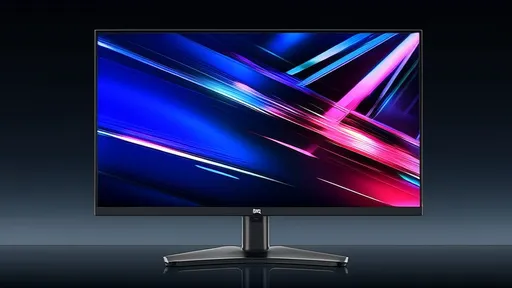
The competitive gamer’s build, however, reads like a different recipe entirely. Here, the latest and greatest CPU, renowned for its blistering single-core speeds, is the undisputed heart of the system. It is paired with low-latency, high-speed RAM and a motherboard designed for stable power delivery to keep the processor fed without throttling. The GPU, while still important, can be a step down from the absolute flagship; often, a previous-generation high-end card or a current-gen mid-range model is more than sufficient to push low graphical settings at 1080p or 1440p to extreme frame rates. The peripherals—a 360Hz+ monitor, a lightning-fast mechanical keyboard, and a precise, lightweight mouse—are not afterthoughts but are considered integral components of the overall performance package.
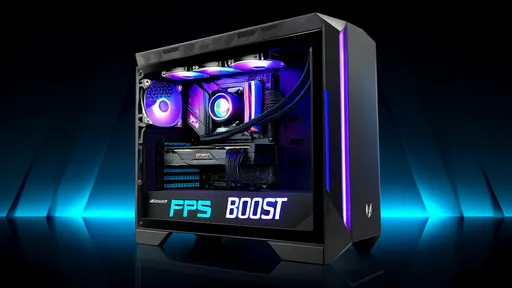
This specialization extends to the very ecosystem surrounding the PC. The rise of custom water-cooling loops, once solely the domain of extreme overclockers, is now also being applied for aesthetic and acoustic tailoring. A builder creating a serene machine for exploration and adventure games might prioritize a near-silent cooling solution to avoid breaking immersion, while a competitive gamer might focus solely on keeping the CPU temperatures as low as possible for sustained boost clocks. Even case selection is influenced by this trend, with some opting for minimalist, elegant designs that blend into a living room setup for controller-based games, while others choose aggressive, airflow-focused towers adorned with RGB lighting that fits the energetic vibe of an esports arena.
This is more than just a passing fad; it is a logical evolution of the DIY ethos. It demonstrates a community that is increasingly knowledgeable and discerning, moving from pure horsepower to harmonious design. The value of a build is no longer measured solely by its price-to-performance ratio in synthetic benchmarks, but by how perfectly it performs its intended function. This trend celebrates the diversity of PC gaming, acknowledging that one size does not fit all. It allows enthusiasts to build a machine that feels truly theirs, optimized not for a chart on a review website, but for the specific joys of their favorite virtual worlds. The ultimate gaming PC is, finally, whatever you need it to be.

By /Aug 26, 2025

By /Aug 26, 2025

By /Aug 26, 2025

By /Aug 26, 2025

By /Aug 26, 2025

By /Aug 26, 2025

By /Aug 26, 2025

By /Aug 26, 2025

By /Aug 26, 2025

By /Aug 26, 2025

By /Aug 26, 2025

By /Aug 26, 2025

By /Aug 26, 2025

By /Aug 26, 2025

By /Aug 26, 2025

By /Aug 26, 2025
By /Aug 26, 2025

By /Aug 26, 2025
By /Aug 26, 2025

By /Aug 26, 2025
