The evolution of virtual reality has long been tethered by two persistent constraints: the physical weight of headsets and the restrictive cables linking users to high-performance computers. For years, these limitations created a paradoxical experience—immersive digital worlds shackled by real-world hardware. But recent breakthroughs in wireless transmission, battery efficiency, and material science are finally severing those chains, delivering a newfound sense of liberation that is fundamentally transforming how we interact with virtual environments.
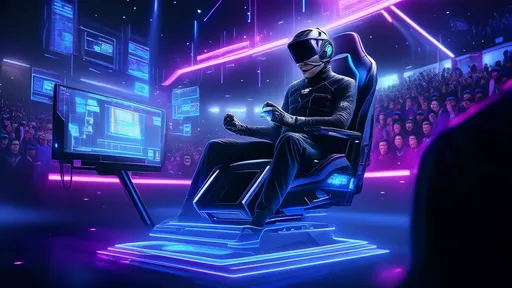
Wireless technology stands as the most revolutionary leap forward. Early VR adopters grew accustomed to the careful dance of avoiding tangled cables, a constant reminder of their physical confines. The shift to standalone headsets and advanced wireless adapters has not merely removed wires; it has rewired the very psychology of immersion. Users report a profound difference in presence—the feeling of truly inhabiting a virtual space—when the last physical tether to the outside world is gone. This freedom enables full-body experiences, from ducking behind virtual cover to spinning around to confront a threat from behind, without the subconscious hesitation of cable management. The technology enabling this, primarily through high-frequency Wi-Fi 6E and dedicated wireless protocols, now delivers data speeds and latency low enough to trick the human brain, making the digital feel tangible.
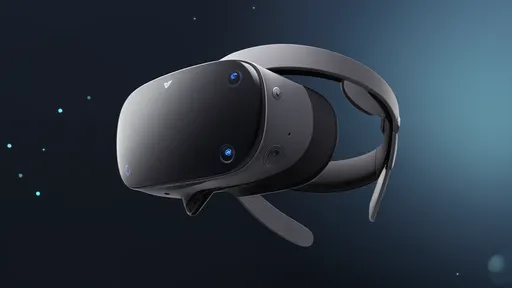
Concurrently, the relentless pursuit of lightweight design is making headsets less of a device and more of an accessory. Engineers are pioneering the use of advanced polymers, carbon fiber composites, and magnesium alloys to strip away every unnecessary gram. The result is headsets that feel less like a helmet and more like a pair of sunglasses. This shift from the front-heavy designs of yesteryear to a balanced weight distribution is crucial. It alleviates pressure on the cheeks and bridge of the nose, allowing for extended play or work sessions without the familiar strain and fatigue. This physical comfort is inextricably linked to mental immersion; a user who is not constantly adjusting a heavy headset is a user who remains deeper in the experience for longer.
Perhaps the most unsung hero of this revolution is battery technology. Wireless freedom is meaningless if it lasts only an hour. Innovations in solid-state battery design and power management software have dramatically extended operational life. Modern systems can now deliver two to three hours of intensive use, and some enterprise-focused models push even further. Furthermore, the development of hot-swappable battery solutions—where a depleted battery can be replaced with a fresh one without powering down the headset—creates a seamless, uninterrupted flow. This eliminates the anxiety of a dying headset mid-experience, a subtle but critical barrier to full immersion that has now been dismantled.
The synergy of these technologies creates a compound effect on user experience that is greater than the sum of its parts. A user wearing a lightweight, wireless headset with a long-lasting battery is no longer a user in the traditional sense; they become an active participant, an embodied agent within the digital realm. This is most evident in social VR applications and enterprise training simulations. Colleagues can collaborate on a 3D model, walking around it naturally and gesturing freely. Friends can play a game of virtual tennis, moving with the same unencumbered athleticism as they would on a real court. The barriers between intent and action have been nearly erased.
Looking ahead, the trajectory points toward even greater integration. The miniaturization of components like pancake lenses and micro-OLED displays will continue to drive down size and weight. The impending widespread adoption of Wi-Fi 7 promises to bolster bandwidth and slash latency even further, paving the way for hyper-realistic graphics untethered from a computer. Researchers are also exploring innovative avenues like peripheral computing, where a small device in a user's pocket handles intensive processing, and wireless power transmission, which could one-day eliminate batteries altogether. The goal is clear: to make the hardware itself disappear, leaving only the experience.
In conclusion, the dual advancements of wireless liberation and physical lightweighting are not merely incremental improvements; they are the foundational pillars ushering in the second wave of virtual reality. By addressing the most fundamental physical grievances, engineers and designers are finally unlocking the medium's true potential for presence, agency, and comfort. The headset is evolving from a bulky piece of machinery into an elegant window to other worlds, and in doing so, it is finally allowing the magic of virtual reality to shine through, untethered and unburdened.
By /Aug 26, 2025

By /Aug 26, 2025

By /Aug 26, 2025
By /Aug 26, 2025
By /Aug 26, 2025

By /Aug 26, 2025

By /Aug 26, 2025
By /Aug 26, 2025

By /Aug 26, 2025
By /Aug 26, 2025

By /Aug 26, 2025

By /Aug 26, 2025
By /Aug 26, 2025
By /Aug 26, 2025
By /Aug 26, 2025
By /Aug 26, 2025
By /Aug 26, 2025
By /Aug 26, 2025
By /Aug 26, 2025

By /Aug 26, 2025
