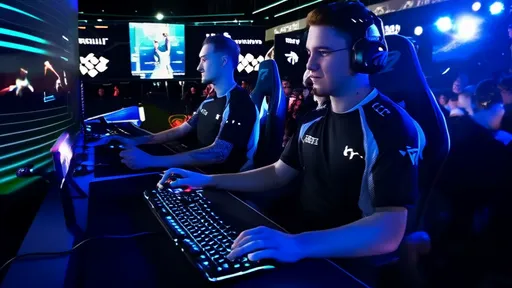
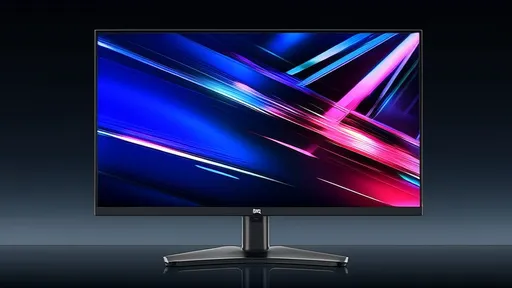
The relentless pursuit of perfection in esports display technology has long been a two-horse race, dominated by the raw speed of refresh rates and the ghost-banishing prowess of response times. For years, manufacturers have engaged in a spec sheet arms race, pushing these metrics to previously unimaginable extremes. We now have monitors boasting refresh rates that flirt with 500Hz and response times measured in fractions of a millisecond, figures that would have seemed like science fiction a decade ago. This breakneck evolution has delivered a competitive edge so tangible that professional gamers and enthusiasts alike consider these features non-negotiable. Yet, as these technical benchmarks approach the physiological limits of human perception, a pressing question emerges from the community: what comes next? The industry is already pivoting, and the next battlefield is not about seeing faster, but about seeing better, more comfortably, and more immersively. The new frontier is a holistic approach to visual performance, moving beyond isolated numbers to a complete viewing experience.
At the heart of this new paradigm is a heightened focus on motion clarity. While high refresh rates lay the foundation for smoothness, they do not, by themselves, guarantee a perfectly clear image during rapid motion. This is where technologies like Backlight Strobing (BFI) and advanced Overdrive tuning come into play. The goal is to eliminate perceived motion blur entirely, creating a viewing experience where even the fastest panning shots render every detail with crystal-clear precision. This isn't just a minor improvement; it's a transformative leap that can make the difference between spotting a pixel-sized enemy in the periphery and losing a crucial round. The engineering challenge is immense, often involving a delicate balancing act to avoid introducing inverse ghosting or flickering, but the payoff for competitive integrity is unparalleled.
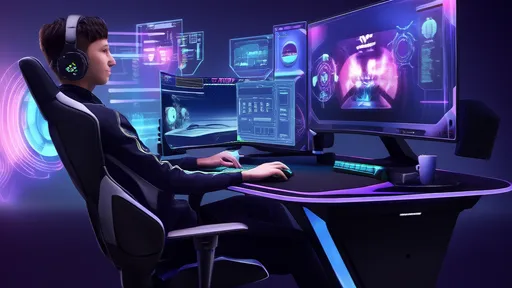
Parallel to the pursuit of clarity is the critical mission of visual comfort. Esports athletes often endure marathon training sessions and lengthy tournaments, subjecting their eyes to immense strain. The industry is now responding with innovations aimed at preserving player health without compromising performance. The implementation of flicker-free backlighting and advanced low-blue-light technologies that don't distort color accuracy is becoming a standard expectation, not just a premium add-on. Furthermore, the science of ergonomics is being taken more seriously than ever before. Monitors are no longer just static screens; they are dynamic tools that must adapt to the user. This has led to a new emphasis on stands that offer effortless height, tilt, swivel, and pivot adjustments, ensuring the perfect viewing angle can be achieved and maintained for hours on end, reducing physical fatigue and promoting better posture. Another dimension rapidly gaining traction is ambient integration. The display is ceasing to be an isolated island of visuals and is instead becoming the command center of the gaming ecosystem. We are seeing the rise of smart lighting systems that sync directly with the on-screen action, extending the color palette and critical visual cues into the player's physical environment. This isn't merely for aesthetic immersion; it provides practical advantages. A flash of red light in the room from a periphery alert can be processed by a player faster than a HUD element on a crowded screen. This seamless blending of the in-game world and the real-world setup creates a more intuitive and reactive gaming environment, effectively expanding the canvas of play beyond the bezels of the monitor. Underpinning all these advancements is a renewed and more sophisticated focus on color performance. The outdated notion that esports monitors must sacrifice color vibrancy for speed is being thorough dismantled. The new generation of fast IPS and OLED panels proves that you can have both blistering performance and stunning, accurate color. Wide color gamut coverage, high brightness levels for enhanced HDR performance, and superior contrast ratios are now key differentiators in high-end esports displays. This ensures that games are not only responsive but also visually spectacular, making practice and play a more engaging and enjoyable experience. This shift acknowledges that esports is not just a competition but also a form of entertainment, watched by millions of spectators who expect a visually compelling broadcast. Finally, the concept of intelligent personalization is defining the next era. The one-size-fits-all approach to display settings is becoming obsolete. We are entering an age of AI-driven optimization, where monitors can analyze the content being displayed and the ambient lighting conditions to automatically adjust settings for an ideal picture. Furthermore, built-in hardware calibration and the ability to save custom profiles for specific games give players unprecedented control over their visual experience. This level of personalization ensures that the technology adapts to the player's preferences and needs, creating a truly tailored instrument for competition rather than a mere off-the-shelf product. In conclusion, the esports display landscape is undergoing a profound and necessary evolution. The industry has successfully conquered the mountains of refresh rate and response time, but the journey is far from over. The next frontier is not a single, easily marketable number, but a multifaceted approach to the entire user experience. It is a comprehensive strategy that prioritizes unparalleled motion clarity, unwavering visual comfort, seamless ambient integration, rich and accurate color, and deeply personalized intelligence. This holistic vision will define the champions of tomorrow's market, creating displays that are not just faster, but smarter, healthier, and more immersive, ultimately serving to elevate both the performance and the well-being of the players who depend on them.
By /Aug 26, 2025
By /Aug 26, 2025

By /Aug 26, 2025
By /Aug 26, 2025
By /Aug 26, 2025
By /Aug 26, 2025
By /Aug 26, 2025
By /Aug 26, 2025

By /Aug 26, 2025
By /Aug 26, 2025
By /Aug 26, 2025
By /Aug 26, 2025
By /Aug 26, 2025
By /Aug 26, 2025
By /Aug 26, 2025
By /Aug 26, 2025
By /Aug 26, 2025
By /Aug 26, 2025
By /Aug 26, 2025

By /Aug 26, 2025
