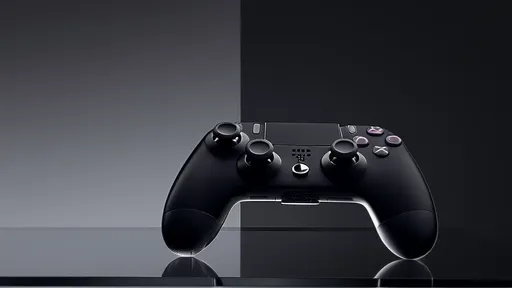
In the world of gaming peripherals, few topics generate as much passionate discussion as controller feel. While visual fidelity and audio immersion often steal the spotlight, the tactile connection between player and game—the very thing we call "handfeel"—remains a profoundly subjective, yet critically important, aspect of the experience. For years, this concept was relegated to forum debates and anecdotal preferences, a realm of "you just have to try it for yourself." However, a quiet revolution is underway within the engineering labs of major hardware manufacturers and the testing benches of dedicated enthusiasts. They are on a quest to deconstruct the esoteric art of handfeel into quantifiable, measurable science, focusing on three pivotal components: stick precision, dead zones, and linear triggers.
The journey begins with the analog stick, the primary instrument of navigation and control for most modern games. Its precision is the cornerstone of accurate input. At its heart lies a component called a potentiometer, which translates physical movement into electrical signals the console or PC can understand. The quality of this component is paramount. High-grade, hall effect potentiometers, which use magnetic fields instead of physical contact to measure movement, are becoming the gold standard for eliminating the drift and wear that plague traditional pots. The resolution of these sensors is measured in bits; a higher bit depth means the stick can report its position to the system with exponentially finer granularity. This is the raw data behind the smooth, precise camera pans in a sprawling open-world game or the minute aiming adjustments in a competitive first-person shooter. It’s the difference between feeling like you’re directly guiding the action and feeling like you’re fighting the controller itself.
Closely tied to precision is the concept of the dead zone. This is a software-defined area around the stick’s neutral center where any detected movement is deliberately ignored. Its primary purpose is to counteract a physical imperfection: stick drift. All analog sticks have a minute amount of natural play and, over time, wear can cause them to not perfectly center themselves, sending erroneous input signals even when untouched. A dead zone filters out this noise, preventing your character from slowly walking off a cliff while you set the controller down. However, this necessary evil comes at a cost. A large, overly aggressive dead zone creates a palpable disconnect; you have to move the stick a significant distance before the game registers any input, resulting in a feeling of sluggishness and lag. The modern pursuit is to develop adaptive and minimal dead zones through sophisticated algorithms that can distinguish between intentional micro-movements and unintentional drift, preserving 1:1 responsiveness without the annoyance of drift.
While sticks guide our direction, triggers often control our speed and intensity. The evolution from simple digital buttons to analog linear triggers represents a massive leap in immersive control. A linear trigger’s value isn’t just in being pressed or not pressed; it’s in the entire journey of its pull. The resistance curve—how much force is required to depress the trigger at any given point—is meticulously engineered. In a racing game, a progressive resistance curve might mimic the pressure of a real car’s brake pedal, allowing for delicate modulation of braking force. Some high-end controllers even incorporate force feedback motors within the triggers themselves, simulating the gritty resistance of drawing a bowstring or the jarring kick of a firearm. This haptic feedback adds a tangible, physical layer to the on-screen action, moving beyond vibration to create a truly dynamic handfeel that actively communicates with the player.
The materials and physical construction of the controller form the foundation upon which all this technology operates. The texture of the plastic or rubberized grip directly impacts comfort and security during long, intense sessions. The tension of the analog springs dictates the snapback and effort required for movement—stiffer springs might offer more precise control for aiming, while looser ones allow for faster, flick-based movements. Even the pivot design of the triggers affects the smoothness of their travel. These elements are not merely cosmetic; they are ergonomic choices that determine fatigue, grip stability, and the overall sensation of quality. A controller can have the most advanced internal sensors in the world, but if it feels cheap, slippery, or awkward in the hand, its performance potential is instantly undermined.
For the competitive gaming community, these quantifiable metrics are not abstract concepts; they are essential tools for gaining an edge. Professional players and esports organizations meticulously test controllers for their exact dead zone values, stick resolution, and trigger response times. Consistency is king. Knowing that a controller has a minimal, predictable dead zone and a consistent linear response across both sticks means predictable and reliable performance in high-stakes tournaments where milliseconds and pixels determine victory or defeat. This demand has fueled a growing market for modular "pro" controllers, which often allow users to physically adjust stick tension, replace thumbstick modules with different shapes and heights, and even remap the trigger stops to define their own analog range, effectively allowing players to craft their own perfect handfeel.
The future of controller handfeel is poised to become even more personalized and immersive. We are already seeing early strides in true pressure-sensitive buttons that can detect how hard you press, not just that you pressed. Haptic feedback technology, moving beyond simple rumble to create nuanced, directional vibrations, is becoming more sophisticated. Imagine feeling the difference between trudging through thick mud and sprinting across a wooden bridge through subtle vibrations in each trigger and stick. The ultimate goal is adaptive handfeel—a controller that can dynamically adjust its resistance, dead zones, and feedback in real-time based on the in-game context, seamlessly morphing from a steering wheel to a weapon to a magic wand at a moment's notice.
The mission to quantify the handfeel is more than just an engineering exercise; it is a fundamental step towards deeper and more intuitive gameplay immersion. By moving the discussion from vague preference to measurable performance, developers and hardware creators can build controllers that disappear in the player's hands, becoming a pure, unfiltered conduit of intent. It’s about closing the gap between thought and action, making the virtual world feel not just seen and heard, but truly touched. This relentless pursuit of perfection ensures that the most important interface in gaming—the one we physically hold—continues to evolve, surprise, and delight us for years to come.

By /Aug 26, 2025

By /Aug 26, 2025

By /Aug 26, 2025

By /Aug 26, 2025

By /Aug 26, 2025

By /Aug 26, 2025

By /Aug 26, 2025

By /Aug 26, 2025

By /Aug 26, 2025

By /Aug 26, 2025

By /Aug 26, 2025
By /Aug 26, 2025
By /Aug 26, 2025

By /Aug 26, 2025
By /Aug 26, 2025
By /Aug 26, 2025
By /Aug 26, 2025
By /Aug 26, 2025
By /Aug 26, 2025

By /Aug 26, 2025
