In the ever-evolving landscape of gaming, the quest for the perfect connection has long been a central battleground. For decades, the wired Ethernet cable has reigned supreme, its reliability and low latency forming the bedrock of competitive and high-fidelity online play. To suggest otherwise was, for a long time, considered heresy. Yet, a new challenger has emerged from the wings, not with a gentle nudge, but with a technological roar. The advent of Wi-Fi 7 and advanced 5G networks promises to shatter the old paradigms, forcing us to ask a question that was once unthinkable: Can wireless truly replace the wire?
The very idea would have been dismissed out of hand just a few years ago. Traditional Wi-Fi, even its capable Wi-Fi 6 predecessor, was plagued by inconsistencies. Gamers in the midst of a crucial raid or a final-circle firefight were all too familiar with the dreaded lag spike, the sudden latency jump, or the complete signal dropout. These issues weren't mere inconveniences; they were game-ending flaws. The physical cable provided a dedicated, stable highway for data packets, while Wi-Fi was a shared, congested public road susceptible to interference from microwaves, neighboring networks, and even thick walls. The wired connection was, and in many ways still is, the gold standard.
Enter Wi-Fi 7, officially known as IEEE 802.11be. This isn't a simple incremental upgrade; it's a foundational shift in wireless technology. Its headline features read like a wish list from network engineers. Multi-Link Operation (MLO) allows a device to simultaneously transmit and receive data across multiple frequency bands (2.4 GHz, 5 GHz, and the new 6 GHz band). This isn't just about aggregating speed; it's about creating immense redundancy. If one band gets congested or experiences interference, the connection instantly and seamlessly fails over to another, maintaining stability in a way previous generations never could.
Furthermore, Wi-Fi 7 introduces 320 MHz channels and 4K QAM (Quadrature Amplitude Modulation), dramatically increasing the raw throughput and efficiency of data transmission. The result is potential multi-gigabit speeds that not only rival but can exceed standard Gigabit Ethernet. More importantly, it slashes latency to the bone. We're talking about theoretical latency so low it begins to encroach on the territory once exclusively held by a physical cable. For a gamer, this translates to actions registering with near-instantaneous precision, making high-stakes, reaction-based gameplay over a wireless connection a genuine possibility.
On the mobile front, the story is equally compelling. 5G, particularly its mmWave and low-band iterations, is maturing rapidly. While early deployments were uneven, modern 5G networks offer dramatically improved latency and bandwidth. For cloud gaming services like Xbox Cloud Gaming and NVIDIA GeForce NOW, which offload the processing heavy-lifting to remote servers, a robust 5G connection can be a game-changer. It enables a high-quality, low-latency gaming experience on smartphones and tablets anywhere with coverage, effectively turning any location into a potential gaming rig. The promise of untethered, high-performance gaming on the go is inching closer to reality.
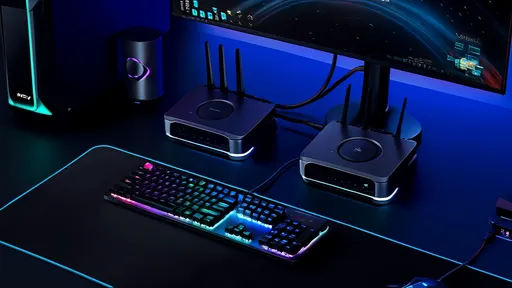
However, the transition from theoretical potential to practical, widespread reality is fraught with caveats. The pristine performance of Wi-Fi 7 is heavily dependent on environment and infrastructure. To achieve its maximum potential, you need a Wi-Fi 7 compatible router, a client device (like a laptop or console) with a Wi-Fi 7 adapter, and a clear radio frequency environment. Thick concrete walls, distance from the router, and interference from a plethora of other smart devices can still degrade performance. While MLO helps mitigate this, it doesn't make a network immune to physics.
Similarly, the performance of 5G is notoriously variable. While you might get blistering speeds and low latency on a clear street corner, moving indoors or to a congested area can cause that performance to plummet. Data caps imposed by cellular carriers also loom as a significant barrier for gamers who regularly download massive game files and updates. The consistency of a wired Ethernet connection, which provides a predictable and unwavering level of performance regardless of external factors, remains its most powerful asset.
So, where does this leave us in the great wired vs. wireless debate? The narrative is no longer black and white. The performance gap has narrowed to a degree that was unimaginable just five years ago. For the vast majority of gamers—including many who enjoy competitive titles—a well-configured modern wireless network powered by Wi-Fi 6E or Wi-Fi 7 will be more than sufficient. It will provide a flawless experience for streaming, single-player games with online elements, and even most multiplayer games. The convenience of a cable-free setup is a powerful draw.
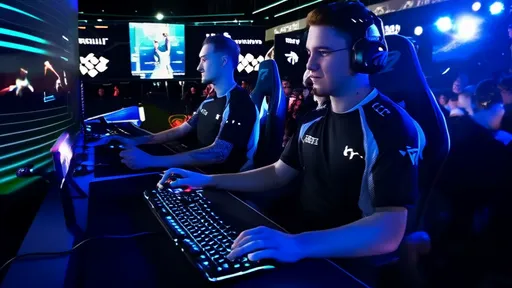
Yet, for the absolute pinnacle of performance, where every single millisecond counts and absolute consistency is non-negotiable—think professional esports tournaments or world-record speedrun attempts—the wired cable is not going anywhere. It remains the safest, most reliable bet. It is the unwavering anchor in a sea of radio waves.
The conclusion, therefore, is not about a definitive replacement but a convergence. Wi-Fi 7 and 5G are not necessarily coming to replace the cable for everyone; they are coming to provide a viable, high-performance alternative that finally closes the gap enough to make the choice a matter of preference and circumstance rather than a strict necessity for quality. The reign of the wire is not over, but it now has a powerful and legitimate rival. The future of game networking is not wired or wireless; it's about having the freedom to choose the best tool for the moment without sacrificing performance, a future that is now finally within our grasp.

By /Aug 26, 2025
By /Aug 26, 2025

By /Aug 26, 2025
By /Aug 26, 2025

By /Aug 26, 2025

By /Aug 26, 2025

By /Aug 26, 2025

By /Aug 26, 2025

By /Aug 26, 2025
By /Aug 26, 2025

By /Aug 26, 2025

By /Aug 26, 2025
By /Aug 26, 2025

By /Aug 26, 2025

By /Aug 26, 2025
By /Aug 26, 2025
By /Aug 26, 2025
By /Aug 26, 2025
By /Aug 26, 2025

By /Aug 26, 2025
